


Why modern cars look and feel so different today
One surefire way to trace just how quickly the world has changed in recent years is to take a look at the road and marvel at the latest breed of automobiles. The newest vehicle designs reflect evolving lifestyles, safety rules, functional needs and technology expectations.
Contemporary cars boast eye-catching styling elements and innovative technology—from more powerful electric batteries and sleeker touchscreens to greater connectivity and autonomous capabilities. Stronger sales of hybrids and EVs in recent years demonstrate that drivers have embraced electrification.
TheZebra explores the latest trends in automotive design, different factors influencing today's cars and what to expect in the near future.
The Biggest Forces Shaping Modern Car Design
Today's cars are heavier, larger and packed with more forward-thinking technology.
"A lot of today's car designs aren't about style—they're about compliance and efficiency," Zoriy Birenboym, CEO of eAutoLease.com, notes. "Safety regulations have become far more demanding, with higher crash standards, pedestrian protection and rollover requirements that all influence size and structure."
Lauren Fix, an automotive expert and analyst with Car Coach Reports, agrees that modern vehicles look taller, bulkier and more similar because strict safety requirements necessitate bigger crush zones, thicker pillars and softer edges to protect passengers.
"Autos increasingly use sensors and cameras that require integrated placements on the front and sides. Efficiency standards push for sleeker, more aerodynamic shapes to improve fuel economy and meet emissions rules. And consumers want more versatility in their vehicles so they can haul families, gear or groceries, which helps explain the popularity of SUVs and crossovers."
Additionally, manufacturers are sharing platforms across multiple models to help control costs, which often results in visual consistency across makes and models.
Why Interiors Have Changed More Than Exteriors
Today, interior amenities are often more eye-popping than the exterior features, among them heads-up displays, driver-assist alerts and more interactive touchscreens that have replaced physical buttons.
"Interiors have changed more quickly than exteriors because software, screens and digital technology have evolved quickly, while exterior designs must meet long-term safety and regulatory requirements," explains Shawn Miller, blogger with The Cars Daily.
Inside the car, brands can change things up quickly without reengineering the entire vehicle. Exterior modifications, on the other hand, require expensive tooling and crash revalidation.
How Driver-Assist Tech Reshaped Car Design
Advanced driver-assistance systems (ADAS) have quietly impacted how cars are built and styled. Radar, lidar, cameras and sensors require clear sightlines, which affect grille openings, mirror placement, bumper design, windshield angles and rooflines. Hoods are higher and pillars thicker because they need to house airbags, sensors and structural reinforcements.
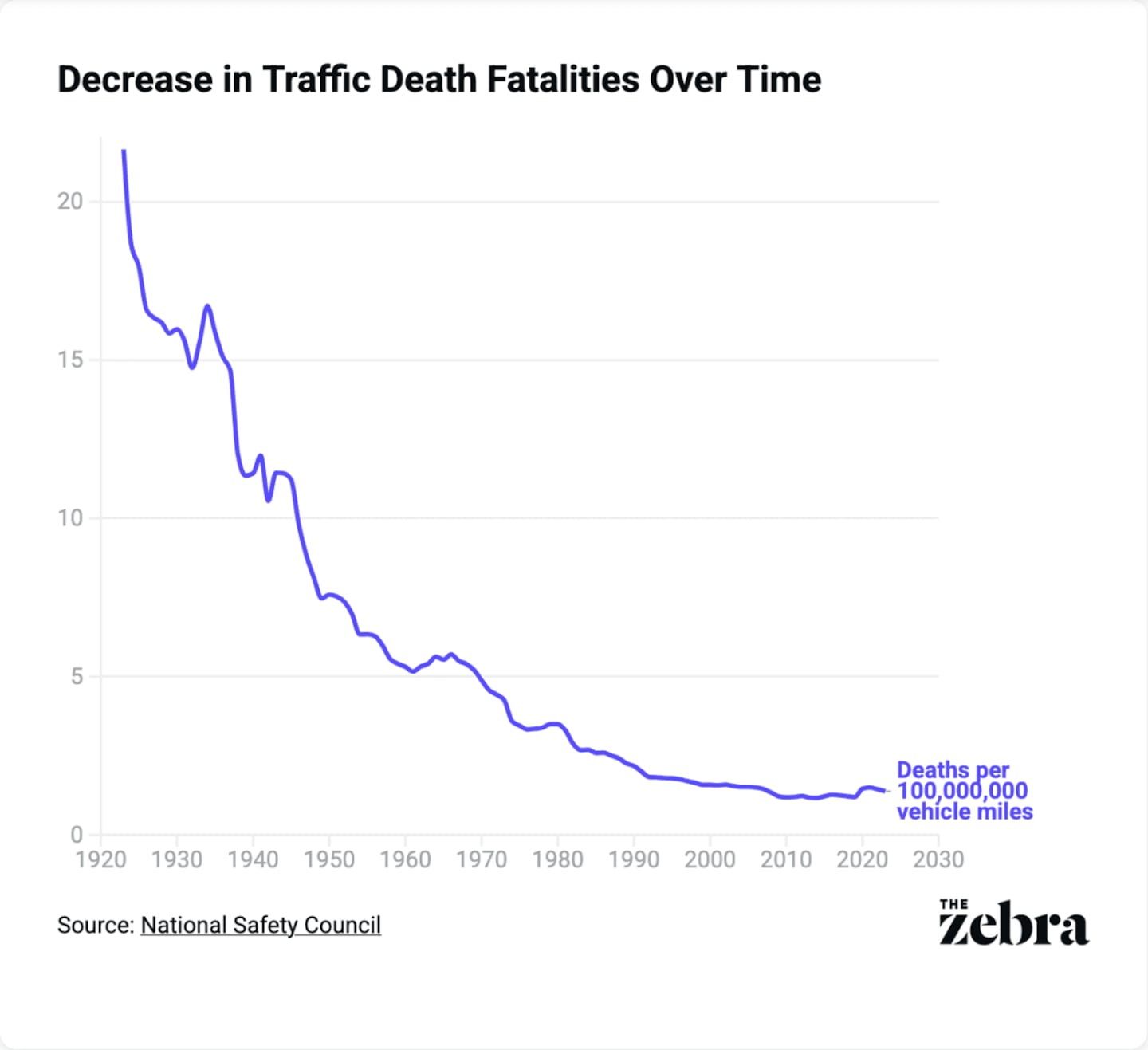
Intelmarket Research reports that over three in five new vehicles today come equipped with basic ADAS features, and ADAS is projected to prevent 37 million crashes, 14 million injuries and 250,000 deaths over the next 30 years in America alone. In the chart below, you can see how the rate of traffic deaths over time has decreased sharply with the introduction of new safety features.
“However, full self-driving remains stuck due to complicated technology, legal and liability issues. But partial systems like adaptive cruise, lane centering, and auto braking have exploded because they are reliable and affordable and can improve safety,” Fix says.
TheZebra
Electrification’s Quiet Influence on All Cars
Meanwhile, more cars nowadays are equipped with electric batteries, which have also changed layouts and proportions. Placing a flat battery pack low in the chassis with compact electric motors at the axles eliminates the engine, transmission tunnel and exhaust, which creates flatter floors, longer wheelbases and cabins and shorter overhangs.
“But heavier battery packs add weight that can reduce efficiency by increasing energy use for acceleration and rolling resistance, while also making handling feel less agile,” says Fix.
Connected Cars and Changing Expectations
Beyond basic Bluetooth, many modern rides stay connected via high-speed 5G cellular, Wi-Fi hotspots and even Satellite links for emergency safety in remote areas. Some models also use V2X tech to "talk" to traffic lights and other cars, while utilizing NFC and Ultra-Wideband to transform your smartphone into a secure, pocket-ready digital key.
“Built-in connectivity is no longer optional. Today’s drivers expect navigation, updates and apps to work seamlessly without relying on their phones alone,” Miller says.
Features That Came Standard – and Those That Disappeared
Many new cars promise a variety of standard features at no extra charge, including Android Auto and Apple CarPlay connectivity, adaptive cruise control, blind spot monitoring, backup cameras, automatic emergency braking, lane assist, automatic high beams, rear cross-traffic alerts, driver monitoring systems and over-the-air update capability.
On the other hand, CD players, manual transmissions, spare tires, physical volume knobs and car manuals are being phased out, as are sedans in general.
Design Trade-offs Consumers Don’t Always Realize
However, newer, larger and digital don’t always mean better for consumers.
“Larger vehicles offer more space and perceived safety but sacrifice fuel efficiency and maneuverability due to added weight and worse aerodynamics. Meanwhile, bigger wheels and low-profile tires look sporty and improve handling grip but deliver a harsher ride, more road noise and higher repair costs from pothole damage,” cautions Fix.
Also, while touchscreens are trendy, many drivers prefer physical buttons that simplify basic tasks.
Truth is, many autos look similar nowadays. That’s because safety laws and cost targets help push designers toward the same practical shapes.
“There’s only so much freedom when aerodynamics, crash physics and efficiency rule the room,” Birenboym says. “True differentiation today often comes from lighting signatures, interior experience, and software – not body shape alone.”
Where Car Design May Shift Toward
In the years ahead, the experts anticipate vehicles offering:
- Fewer screens, but more physical buttons and tactile controls to reduce driver distraction. "Expect technology to fade more into the background rather than demand your attention while driving," predicts Miller.
- Advanced voice controls, gesture controls and eye-tracking AI that allow drivers to focus on the road.
- Biometric health-sensing seats that employ embedded sensors to monitor driver fatigue and stress levels, automatically adjusting the cabin's climate and haptics.
- More personalized and user-friendly cabins with less clutter. "Expect cars to balance high-tech capability with the kind of simple, safe operation people actually want from everyday driving," Fix says.
- More sustainable interior appointments, such as recycled ocean plastics and bio-based textiles that provide more tactile luxury over hard plastics.
The Bottom Line
Design choices in new autos play a major role in comfort, safety, repair costs and ownership experience. It’s smart to pay close attention to the latest car styling trends and offerings so you can make a more informed decision when it’s time to purchase, avoid buyer's remorse, and get better value from your chosen vehicle.
This story was produced by TheZebra and reviewed and distributed by Stacker.